26.01.2026 |
Research
Mandatory inter-municipal cooperation reduces housing values by weakening local public services
A study by Alessandro Sovera examines how mandatory inter-municipal cooperation affects local welfare, using housing markets as a comprehensive measure of residents’ valuation of local governance.
A recent study by Alessandro Sovera (Tampere University, FIT) analyzes Italy’s 2010 reform, which required municipalities below a population threshold to jointly manage core administrative functions. Exploiting this threshold through a fuzzy difference-in-discontinuity design and nationwide administrative data, the study estimates the causal effects of mandatory cooperation on housing prices, public services, and population dynamics.
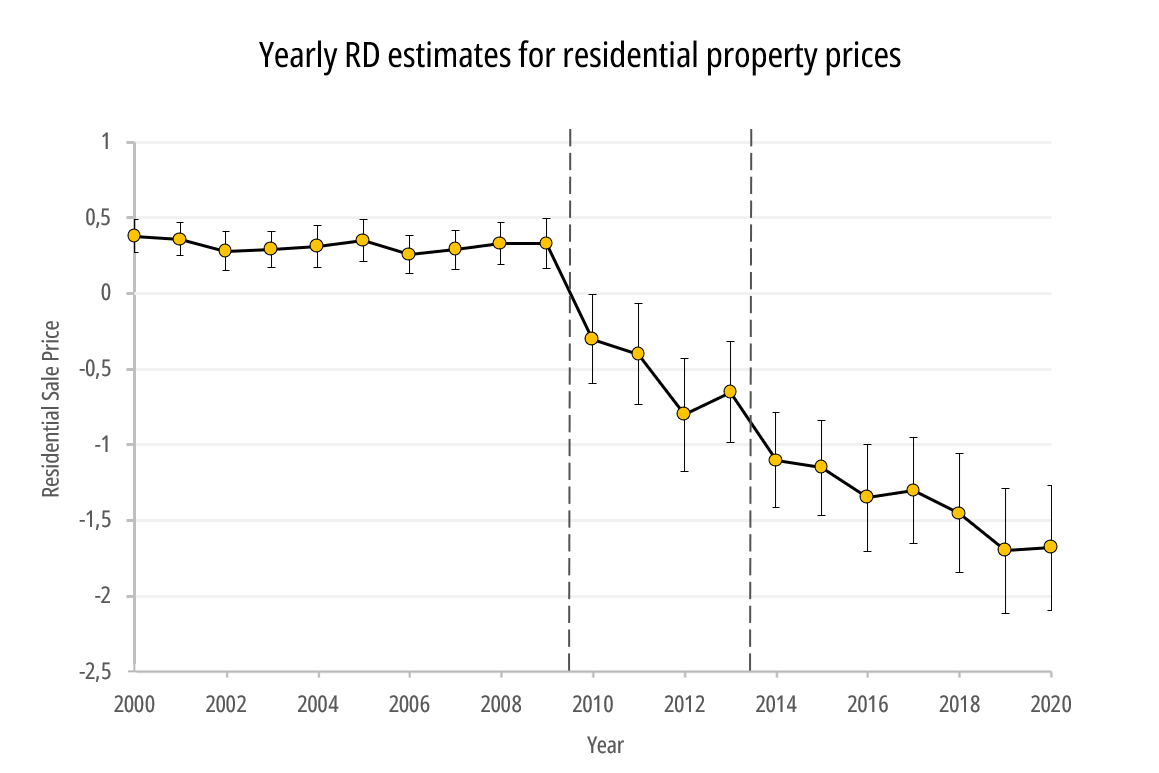
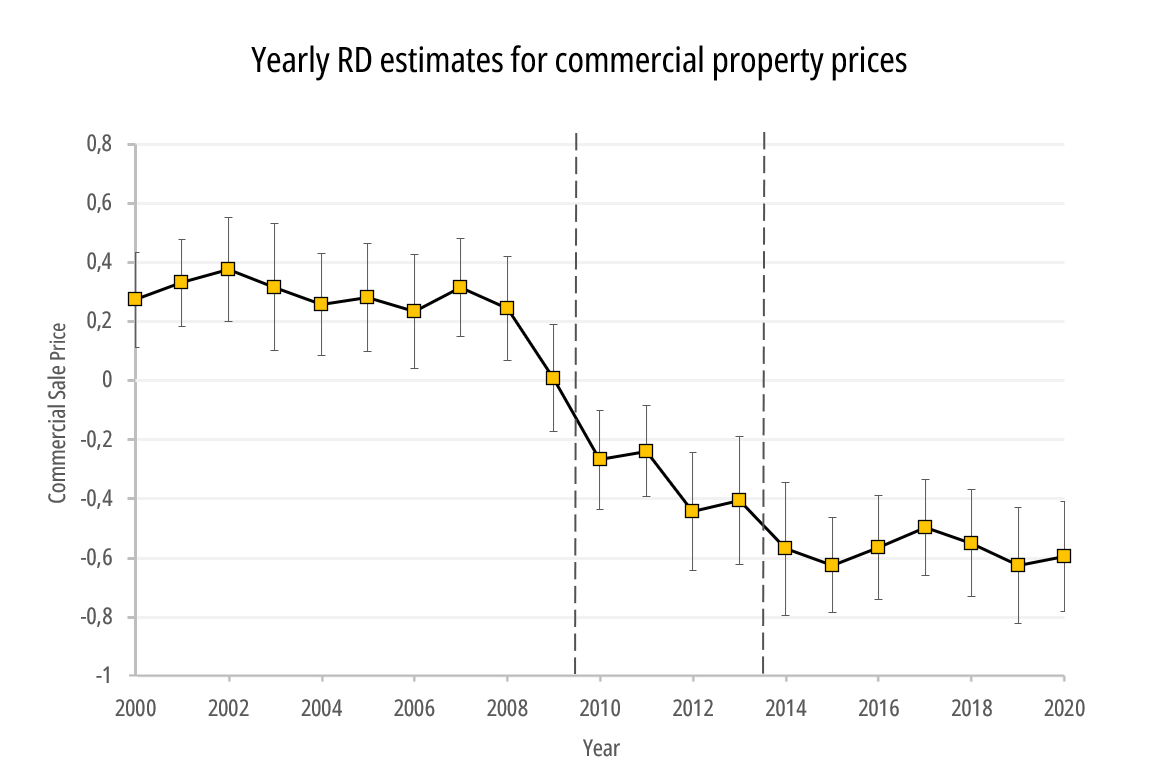
Municipalities induced to cooperate by the mandate experience significant and persistent declines in property values. Residential housing prices fall by around 4–6 percent, while commercial property values decline by 11–18 percent. These effects emerge immediately after the reform and persist over time, indicating a sustained deterioration in local attractiveness rather than a temporary adjustment.
The decline in property values is not driven by changes in taxation or housing supply. Instead, mandatory cooperation weakens local public services. Childcare, street lighting, waste collection, policing, and library services all deteriorate after the reform. At the same time, current municipal expenditures increase, suggesting that coordination and administrative costs crowd out spending on service delivery. Residents respond by relocating. Affected municipalities experience slower population growth and higher net out-migration, consistent with households “voting with their feet” in response to declining local amenities.
Compliance with the mandate is limited. Only about 29 percent of eligible municipalities participate in inter-municipal communities as a result of the reform. The estimated effects therefore apply to municipalities whose cooperation status was altered by the population threshold—typically larger, denser, and administratively more capable jurisdictions rather than the smallest municipalities the policy was intended to support. Even for this group, mandatory cooperation raises operating costs and reduces welfare.
Overall, the findings show that mandatory inter-municipal cooperation can backfire when imposed uniformly across heterogeneous municipalities. Rather than generating efficiency gains, the reform weakened service provision, reduced housing wealth, and encouraged out-migration. The results suggest that policies aimed at strengthening local governance should rely less on coercive integration and more on voluntary cooperation, technical assistance, and capacity-building tailored to local administrative conditions.
The full text of FIT Working Paper 22:
Alessandro Sovera (2025). When Integration Backfires: Examining the Effects of Mandatory Inter-Municipal Cooperation on Local Housing Markets. FIT Working Paper 40/2025.


