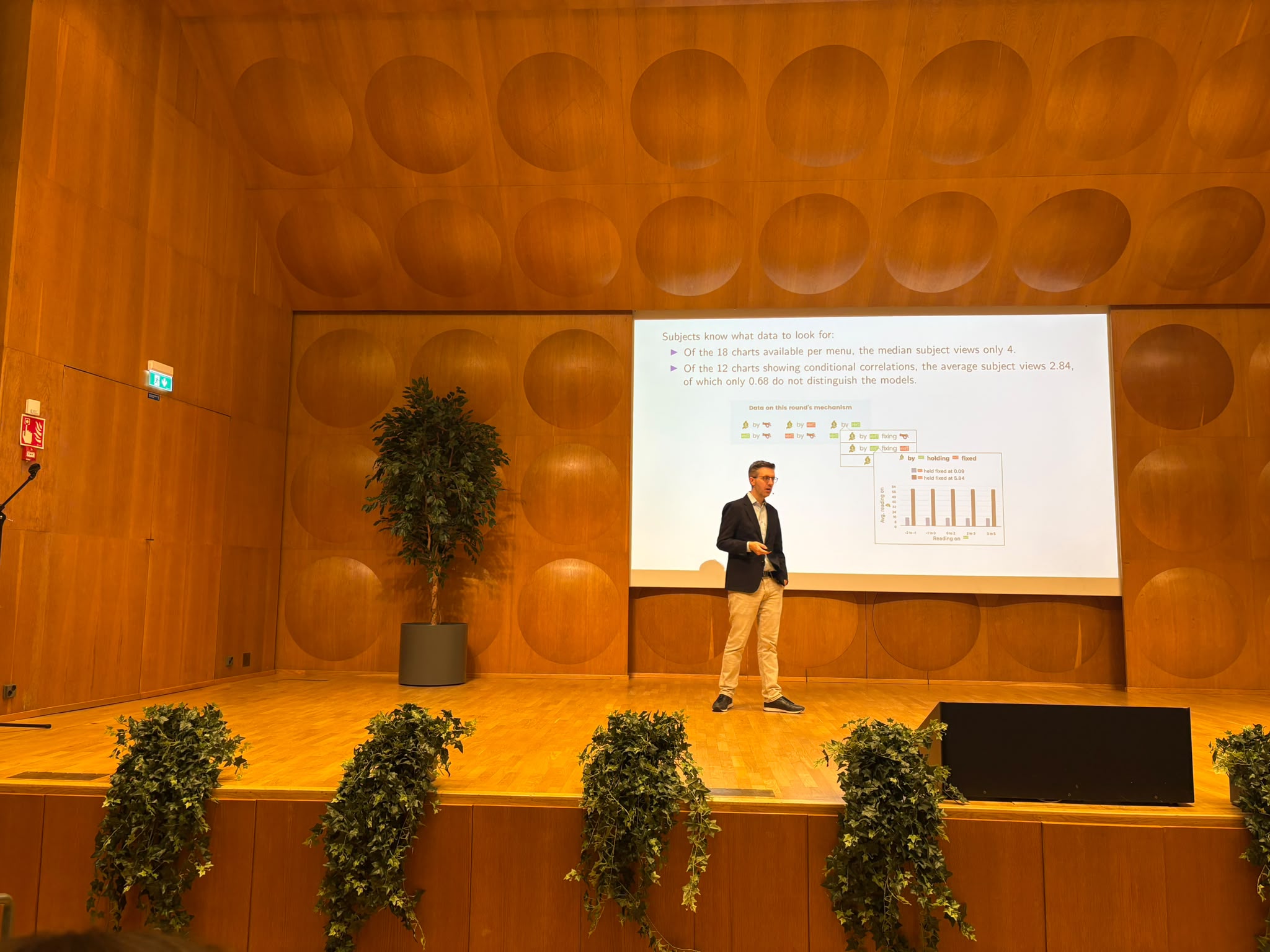
Behavioural economists gather in Helsinki: NCBEE 2026
Behavioural and experimental economists from across the Nordics and beyond met in Helsinki for the 18th NCBEE in September 2026. FIT researchers took part both as organizers and presenters, bringing insights from behavioural approaches to tax and benefit systems.
The 18th Nordic Conference in Behavioral and Experimental Economics (NCBEE) took place on September 25-26, 2026 in Helsinki, hosted by Hanken School of Economics and Helsinki GSE. The yearly conference serves as a meeting point for behavioural and experimental economists in the Nordic countries, and also attracts researchers more broadly from Europe and beyond. This year, around 100 researchers gathered in Helsinki to present and discuss their latest work.
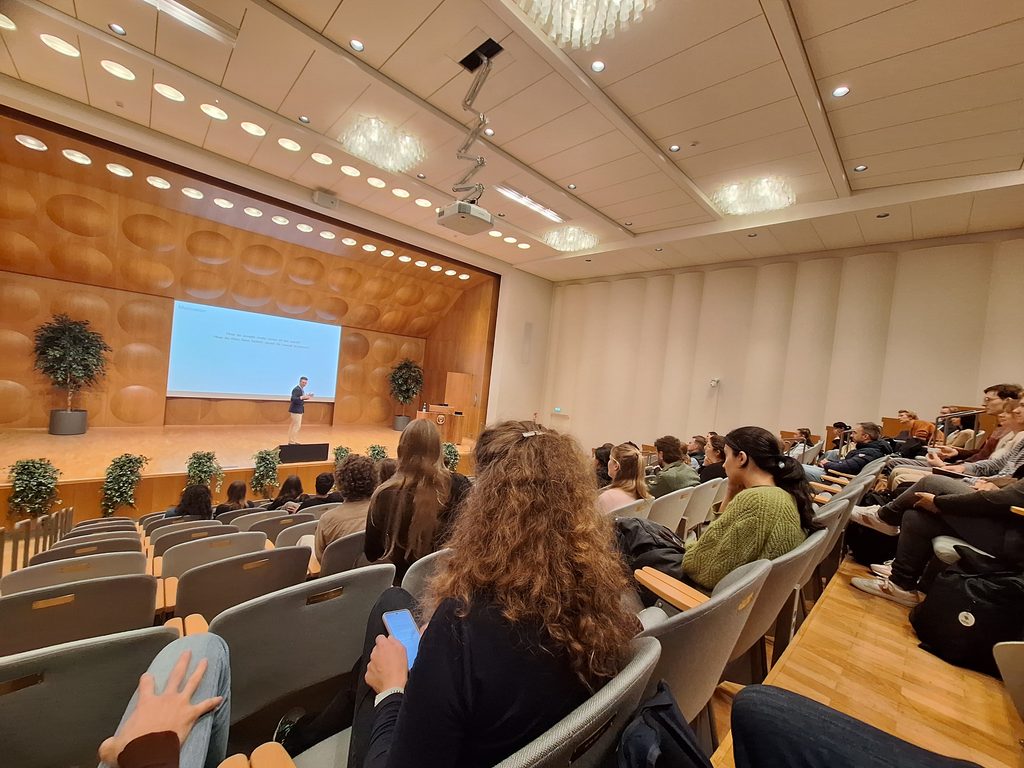
The program featured keynote lectures by Kirby Nielsen (Caltech) and Sandro Ambuehl (University of Zurich), and included more than 30 parallel sessions covering topics across behavioural, experimental, and empirical economics, including decision theory, public policy, and market design. The event provided an active forum for both senior scholars and early-career researchers to exchange ideas and foster international collaborations.
FIT researchers Martin Brun (Tampere University, Finnish Centre of Excellence in Tax Systems Research FIT) and Matias Giaccobasso (VATT, FIT) served on the conference organizing committee.
— Behavioural economics has become a prominent field within economics. It takes into account, for example, the role of social norms and other-regarding considerations in driving individual behaviour, as well as potential errors in decision-making. The approach goes far beyond a model of individuals as self-interested and fully rational decision-makers, explains Brun.
— Tax and benefit systems are highly complex, and are therefore a prime example of a context where individuals are faced with complicated decision-making situations. This is one reason why applications of behavioural economics are central to the research carried out at FIT, says FIT director Kaisa Kotakorpi.
— Behavioural economics has also played a key role in pushing for the use of experimental methods in economics. This development has been an important part of what is usually called the credibility revolution in economics, explains Giaccobasso.
Several FIT researchers presented their latest research at the conference:
Martin Brun (Tampere University, FIT): Role Models and Early Interest in STEM
Matti Hovi (Tampere University, FIT): Social Information and Student Engagement in Higher Education: Evidence from a Field Experiment
Aliisa Koivisto (VATT, FIT): Optimization errors in taxes
Kaisa Kotakorpi (Tampere University, FIT): Which Ponds Do We Choose, and Why? The Choice of Income Reference Group and Its Consequences
Satu Metsälampi (University of Turku, FIT): Does Knowing Income Differences Change How We Treat Others? Evidence on Altruism, Trust, and Cooperation
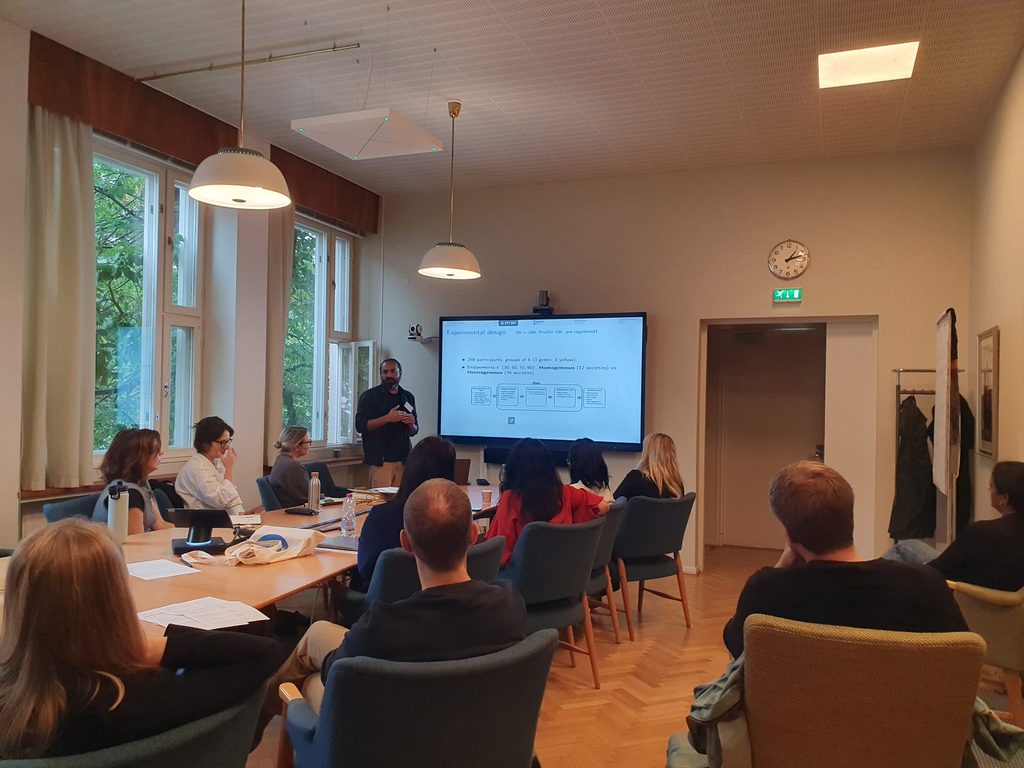
Photos: Daniel Carvajal, Martin Brun, Topi Miettinen


