Combining part-time work and social benefits: Empirical evidence from Finland
The study by Salla Kalin, Tomi Kyyrä and Tuomas Matikka examines how the 300-euro earnings disregards on social benefits affected part-time employment during unemployment.
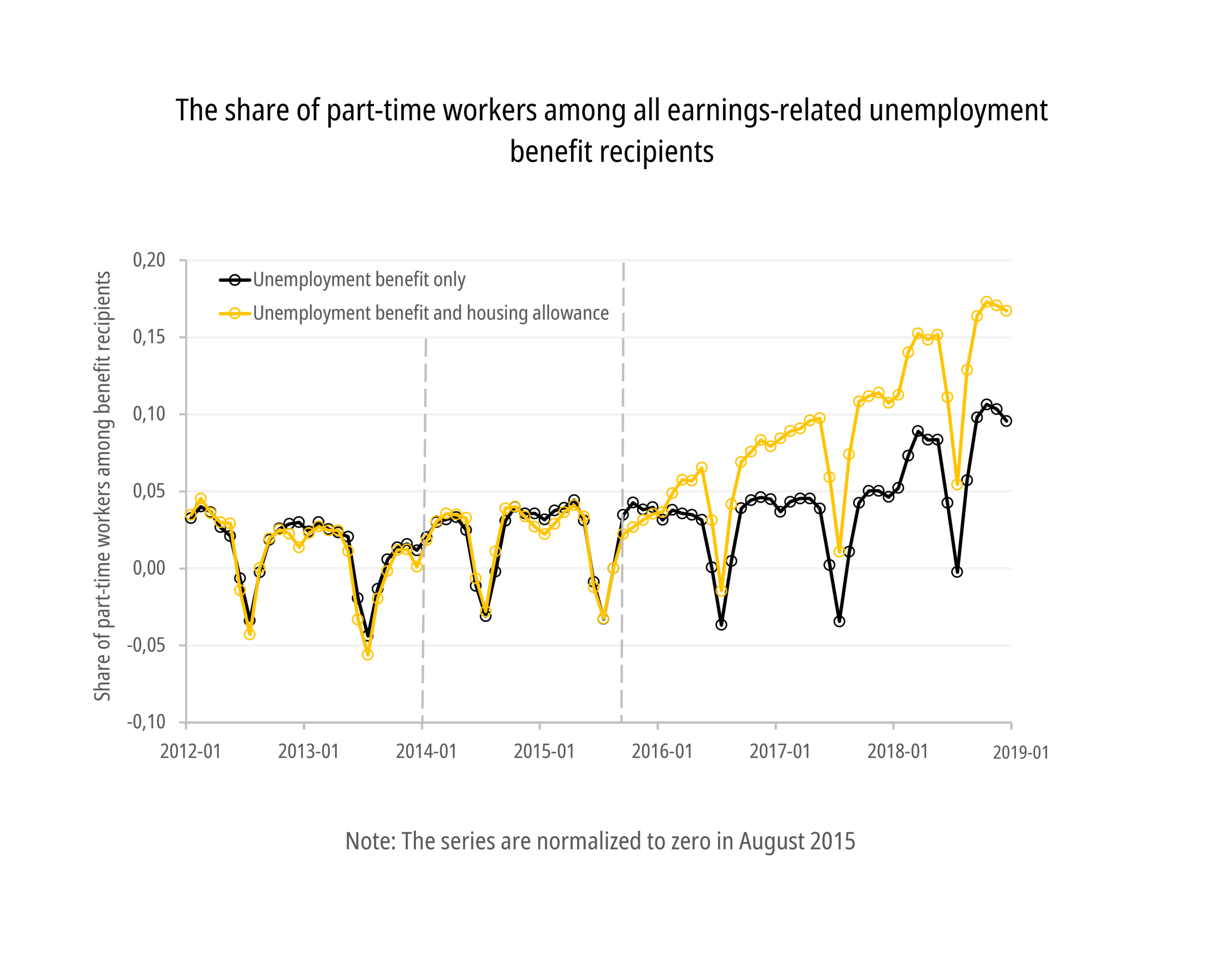
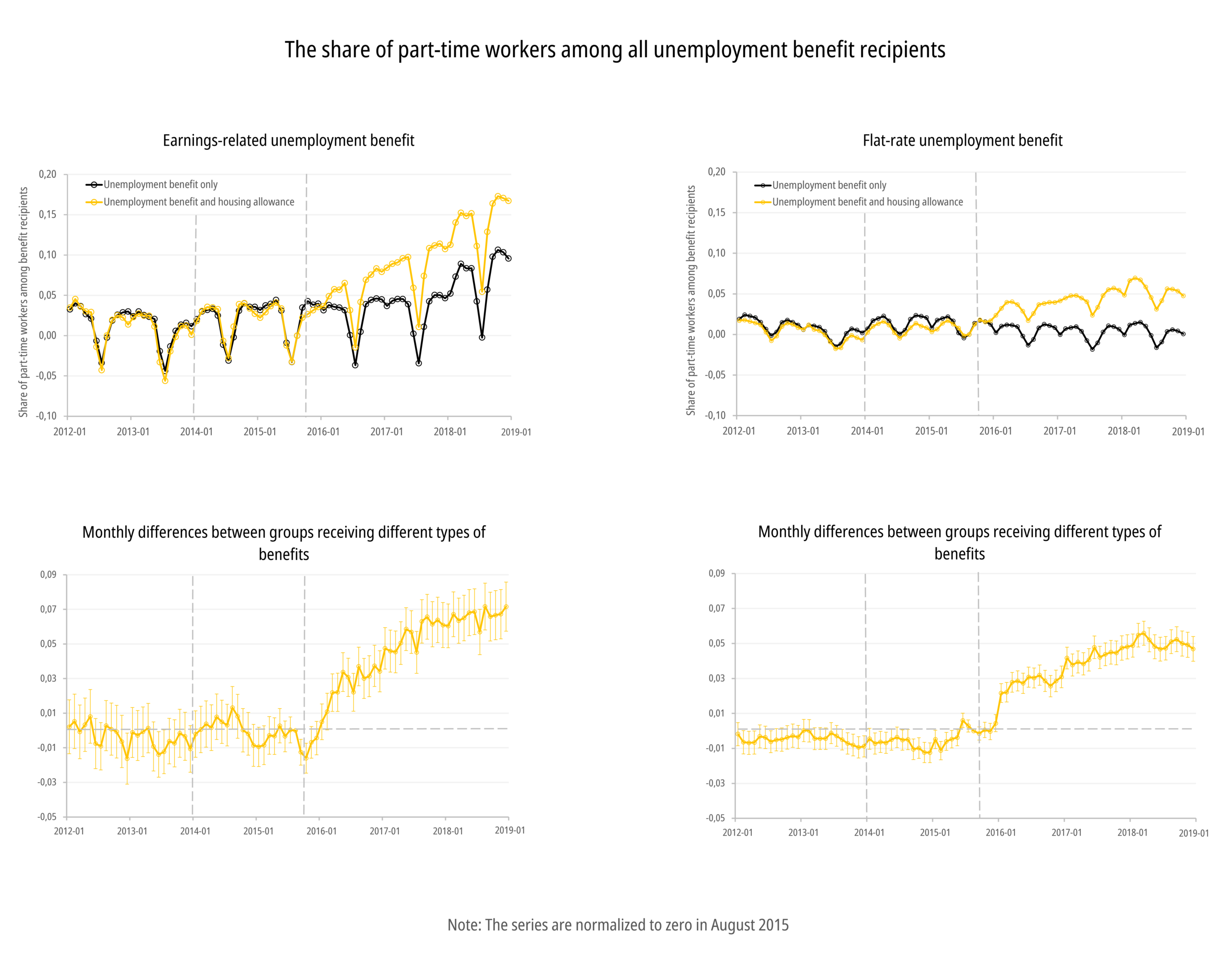
The study by Salla Kalin, Tomi Kyyrä and Tuomas Matikka examines how the 300-euro earnings disregards on social benefits affected part-time employment during unemployment. After the implementation of earnings disregards that allowed individuals to earn up to 300 euros per month without reductions in their benefits, the share of part-time workers among unemployment benefit recipients increased from about 10 percent to almost 18 percent in a few years. Based on the housing allowance reform of 2015, the earnings disregard in housing allowances increased the share of part-time workers by 4.1 – 4.5 percentage points (23–32%).
The study used population-wide data from Finland and utilized the variation in the impact of the reforms on incentives between individuals eligible for different types of benefits. The comparisons were made between individuals receiving only unemployment benefit and those receiving both unemployment benefit and housing allowance, separately for recipients of earnings-related and flat-rate unemployment benefits.
The results show that part-time work among benefit recipients responds strongly to financial incentives: the participation elasticity of part-time work is approximately 1. The study found no evidence that earnings disregards crowd out full-time employment, but instead found moderate positive longer-run employment effects.
The article Combining part-time work and social benefits: Empirical evidence from Finland has been published in Journal of Public Economics in August 2026.


